Title

Spróbuj wyszukać według słowa kluczowego, kodu zamówieniowego, kodu produktu lub numeru seryjnego np. "CM442" lub "Karta katalogowa"
Aby rozpocząć wyszukiwanie, należy wprowadzić minimum 2 znaki.

Filtracja wirusów (filtracja z przepływem stycznym)

Zapoznaj się z punktami pomiarowymi i wyborem przyrządów w całym procesie filtracji wirusów

L F T P P P T A UV F A pH A Cond A pH A Cond A UV 1次側 2次側 G - ウイルスろ過 (TFF) フィルター Einlass Auslass G - Virusfiltration (Tangentialflussfiltration) Filter Inlet Outlet G - Virus filtration (tangential flow filtration) Filter
Tank level monitoring
Retentate flow
Temperature
Retentate pressure
Permeate pressure
Feed pressure
Temperature
Permeate UV
Permeate flow
System pH
System conductivity
Retentate pH
Retentate conductivity
Retentate UV
Punkt pomiarowy Produkt Alternatywy
Poziom pomiar w: Tank level monitoring

Endress+Hauser oferuje szereg przyrządów analitycznych idealnych dla tego etapu.

Alternatywy:

Wymagania ogólne:

  • Cleanability, no dead legs, front flush mounting
  • No interaction with agitator operation
  • Design according to ASME BPE standard

Wymagania techniczne:

  • Measuring task: Continuous / Liquids
  • Process pressure: 0 to 16 bar (0 to 232 psi)
  • Max. process temperature: 40°C (104°F)
  • CIP/SIP: 130°C (266°F)
  • Density: 0.8 to 1.25 g/cm³
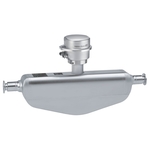
Przepływ pomiar w: Retentate flow

Endress+Hauser oferuje szereg przyrządów analitycznych idealnych dla tego etapu.

Alternatywy:

Wymagania ogólne:

  • Cleanability (CIP/SIP), no dead legs
  • Fully self-drainable in horizontal installations
  • Design according to ASME BPE standard
  • High reproducibility over a large flow range
  • Small quantities

Wymagania techniczne:

  • Measuring task: Liquids
  • Process pressure: 0 to 16 bar (0 to 232 psi)
  • Max. process temperature: 40 °C (104 °F)
  • CIP/SIP: 130°C (266°F)
  • Density: 0.8 to 1.25 g/cm³
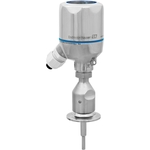
Temperatura pomiar w: Temperature

Endress+Hauser oferuje szereg przyrządów analitycznych idealnych dla tego etapu.

Alternatywy:

Wymagania ogólne:

  • Cleanability, no dead legs, front flush mounting
  • Installation in thermowell
  • Easy calibration
  • Long-term stability
  • Linearity over the measurement range
  • Design according to ASME BPE standard

Wymagania techniczne:

  • Measuring task: Thermometer
  • Process pressure: 0 to 16 bar (0 to 232 psi)
  • Max. process temperature: 40°C (104°F)
  • CIP/SIP: 130°C (266°F)
  • Density: 0.8 to 1.25 g/cm³
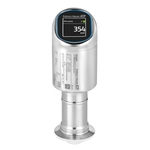
Ciśnienie pomiar w: Retentate pressure

Endress+Hauser oferuje szereg przyrządów analitycznych idealnych dla tego etapu.

Alternatywy:

Wymagania ogólne:

  • Front flush mounting for drainability
  • Fast temperature shock response
  • High linearity
  • Design according to ASME BPE standard

Wymagania techniczne:

  • Measuring task: Pressure
  • Process pressure: 0 to 16 bar (0 to 232 psi)
  • Max. process temperature: 40°C (104°F)
  • CIP/SIP: 130°C (266°F)
  • Density: 0.8 to 1.25 g/cm³
Ciśnienie pomiar w: Permeate pressure

Endress+Hauser oferuje szereg przyrządów analitycznych idealnych dla tego etapu.

Alternatywy:

Wymagania ogólne:

  • Front flush mounting for drainability
  • Fast temperature shock response
  • High linearity
  • Design according to ASME BPE standard

Wymagania techniczne:

  • Measuring task: Pressure
  • Process pressure: 0 to 16 bar (0 to 232 psi)
  • Max. process temperature: 40°C (104°F)
  • CIP/SIP: 130°C (266°F)
  • Density: 0.8 to 1.25 g/cm³
Ciśnienie pomiar w: Feed pressure

Endress+Hauser oferuje szereg przyrządów analitycznych idealnych dla tego etapu.

Alternatywy:

Wymagania ogólne:

  • Front flush mounting for drainability
  • Fast temperature shock response
  • High linearity

Wymagania techniczne:

  • Measuring task: Pressure
  • Process pressure: 0 to 16 bar (0 to 232 psi)
  • Max. process temperature: 40°C (104°F)
  • CIP/SIP: 130°C (266°F)
  • Density: 0.8 to 1.25 g/cm³
Temperatura pomiar w: Temperature

Endress+Hauser oferuje szereg przyrządów analitycznych idealnych dla tego etapu.

Alternatywy:

Wymagania ogólne:

  • Cleanability, no dead legs, front flush mounting
  • Installation in thermowell
  • Easy calibration
  • Long-term stability
  • Linearity over the measurement range
  • Design according to ASME BPE standard

Wymagania techniczne:

  • Measuring task: Thermometer
  • Process pressure: 0 to 16 bar (0 to 232 psi)
  • Max. process temperature: 40°C (104°F)
  • CIP/SIP: 130°C (266°F)
  • Density: 0.8 to 1.25 g/cm³
Analiza pomiar w: Permeate UV

Endress+Hauser oferuje szereg przyrządów analitycznych idealnych dla tego etapu.

Alternatywy:

Wymagania ogólne:

  • Fast response time
  • Cleanability (CIP/SIP), gap-free design
  • Fully self-drainable in horizontal installations
  • Design according to ASME BPE standard
  • Smallest hold-up volume

Wymagania techniczne:

  • Measuring task: Concentration
  • Process pressure: 0 to 16 bar (0 to 232 psi)
  • Max. process temperature: 40°C (104°F)
  • CIP/SIP: 130°C (266°F)
  • Density: 0.8 to 1.25 g/cm³
Przepływ pomiar w: Permeate flow

Endress+Hauser oferuje szereg przyrządów analitycznych idealnych dla tego etapu.

Alternatywy:

Wymagania ogólne:

  • Cleanability (CIP/SIP), no dead legs
  • Fully self-drainable in horizontal installations
  • Design according to ASME BPE standard
  • High reproducibility over a large flow range
  • Small quantities

Wymagania techniczne:

  • Measuring task: Liquids
  • Process pressure: 0 to 16 bar (0 to 232 psi)
  • Max. process temperature: 40 °C (104 °F)
  • CIP/SIP: 130°C (266°F)
  • Density: 0.8 to 1.25 g/cm³
Analiza pomiar w: System pH

Endress+Hauser oferuje szereg przyrządów analitycznych idealnych dla tego etapu.

Alternatywy:

Wymagania ogólne:

  • Cleanability (CIP/SIP), no dead legs
  • High accuracy
  • Suitable for CIP/SIP and autoclaves
  • Long-term stability
  • Easy and accurate calibration
  • Design according to ASME BPE standard

Wymagania techniczne:

  • Measuring task: pH
  • Process pressure: 0 to 16 bar (0 to 232 psi)
  • Max. process temperature: 40°C (104°F)
  • CIP/SIP: 130°C (266°F)
  • Density: 0.8 to 1.25 g/cm³
Analiza pomiar w: System conductivity

Endress+Hauser oferuje szereg przyrządów analitycznych idealnych dla tego etapu.

Alternatywy:

Wymagania ogólne:

  • Cleanability (CIP/SIP), gap-free design
  • Wide measurement range 1µS/cm to 100 mS/cm
  • Suitable for CIP/SIP and autoclaves
  • Design according to ASME BPE standard

Wymagania techniczne:

  • Measuring task: Conductivity
  • Process pressure: 0 to 16 bar (0 to 232 psi)
  • Max. process temperature: 40°C (104°F)
  • CIP/SIP: 130°C (266°F)
  • Density: 0.8 to 1.25 g/cm³
Analiza pomiar w: Retentate pH

Endress+Hauser oferuje szereg przyrządów analitycznych idealnych dla tego etapu.

Alternatywy:

Wymagania ogólne:

  • High accuracy
  • Suitable for CIP/SIP
  • Long-term stability
  • Easy and accurate calibration
  • Design according to ASME BPE standard

Wymagania techniczne:

  • Measuring task: pH
  • Process pressure: 0 to 16 bar (0 to 232 psi)
  • Max. process temperature: 40°C (104°F)
  • CIP/SIP: 130°C (266°F)
  • Density: 0.8 to 1.25 g/cm³
Analiza pomiar w: Retentate conductivity

Endress+Hauser oferuje szereg przyrządów analitycznych idealnych dla tego etapu.

Alternatywy:

Wymagania ogólne:

  • High accuracy
  • Wide measurement range
  • Suitable for CIP/SIP
  • Fast response time
  • Design according to ASME BPE standard

Wymagania techniczne:

  • Measuring task: Conductivity
  • Process pressure: 0 to 16 bar (0 to 232 psi)
  • Max. process temperature: 40°C (104°F)
  • CIP/SIP: 130°C (266°F)
  • Density: 0.8 to 1.25 g/cm³
Analiza pomiar w: Retentate UV

Endress+Hauser oferuje szereg przyrządów analitycznych idealnych dla tego etapu.

Wymagania ogólne:

  • Fast response time
  • Cleanability (CIP/SIP), gap-free design
  • Fully self-drainable in horizontal installations
  • Design according to ASME BPE standard
  • Smallest hold-up volume

Wymagania techniczne:

  • Measuring task: Concentration
  • Process pressure: 0 to 16 bar (0 to 232 psi)
  • Max. process temperature: 40°C (104°F)
  • CIP/SIP: 130°C (266°F)
  • Density: 0.8 to 1.25 g/cm³
Moduł technologiczny ze stali nierdzewnej stosowany w produkcji biofarmaceutycznej

Główne wyzwania związane z oprzyrządowaniem w procesie filtracji wirusów

Różnica ciśnień jako wskaźnik zanieczyszczenia: systemy ciągłej filtracji wirusowej są szczególnie wrażliwe, ponieważ długotrwała praca zwiększa ryzyko wzrostu ciśnienia i zanieczyszczenia. Zmiany warunków zasilania mogą również powodować wzrost ciśnienia w systemie.

Stabilność przepływu i strumienia jako wskaźnik kontroli procesu: skuteczność filtracji wirusów w dużym stopniu zależy od utrzymania określonego strumienia przez membranę. Niestabilność przepływu może wpływać na czas przebywania i obciążenie filtra.

Wykrywanie zanieczyszczenia filtra przed awarią: niestety rzadko istnieje możliwość bezpośredniego pomiaru dokładnego pozostałego okresu eksploatacji filtra wirusowego. Zanieczyszczenie narasta stopniowo i nie ma urządzenia, które bezpośrednio mierzyłoby integralność membrany podczas pracy. Dlatego analiza trendów jest często bardziej przydatna niż pojedynczy pomiar.

Najważniejsze produkty z naszej oferty

Poznaj nasze innowacyjne rozwiązania dla procesu filtracji wirusowej

/
Najczęściej zadawane pytania

Często zadawane pytania dotyczące procesu filtracji wirusów