Instrumentation and measurement in gas sweetening units: Real-time insights for full process control
Accurate measurement of H₂S, CO₂, flow, pressure, level and temperature to ensure reliable acid gas removal and consistent gas quality

Gas sweetening units operate under changing process conditions that can affect absorber efficiency, solvent health, energy consumption and treated gas quality. Maintaining reliable operation requires accurate measurement of critical process variables, including flow, pressure, temperature, level, pH and gas quality. These measurements provide the foundation for process control, enabling operators to optimize acid gas removal, improve regeneration efficiency, protect downstream equipment issues and maintain compliance with product gas specifications. Together, they support stable plant operation, lower operating costs and long-term process reliability.
Your optimization potential in the gas sweetening process
Explore our process map to understand the key measurement parameters across amine-based gas sweetening units and discover where targeted improvements can enhance acid gas removal efficiency, reduce solvent losses and maintain stable, specification-compliant gas production.


Reliable H2S and CO2 monitoring for sweet gas quality assurance
Gas sweetening processes remove H₂S and CO₂ from sour gas to achieve the required product gas specifications. Accurate measurement of acid gas concentrations before and after the amine treatment unit provides direct insight into sweetening performance. Continuous monitoring helps operators verify removal efficiency, optimize treatment and ensure that treated gas consistently meets specifications, while helping safeguard downstream equipment and pipeline integrity. TDLAS gas analyzers enable reliable H₂S and CO₂ monitoring at these critical measurement points:
- Optimize sweetening performance: Fast response to concentration changes helps improve process control and amine unit efficiency.
- Operate with confidence: Insensitive to stream composition changes and designed for challenging hazardous environments.
- Measure accurately, maintain less: Non-contact TDLAS technology delivers high sensitivity and robust performance with minimal maintenance.
For more comprehensive gas composition analysis, Raman spectroscopy complements targeted TDLAS measurements by enabling simultaneous monitoring of multiple gas components.

Accurate flow measurement: Improving process efficiency with Coriolis technology
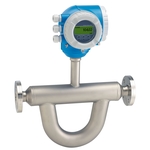
From amine circulation and solvent loading to regeneration and energy management, flow data provides the foundation for effective process control. In challenging sweetening applications, factors such as foaming, contamination, solvent degradation and entrained gas can further complicate process control, making robust and reliable flow measurement critical for maintaining confidence in operating data. Coriolis flowmeters provide direct mass flow measurement independent of pressure, temperature or density fluctuations. Instruments such as the Proline Promass F 300 and Proline Promass Q 300 allow operators to:
- Improve process visibility with simultaneous measurement of mass flow, density and temperature, enabling better solvent management and process control.
- Maintain reliable measurement under challenging process conditions, including entrained gas, contamination and changing fluid properties.
- Increase operational reliability with Heartbeat Technology, advanced diagnostics and early detection of process deviations to support proactive maintenance and stable operation.

Temperature under control: Maintaining absorber and regenerator efficiency
Accurate temperature measurement helps operators maintain optimal operating conditions, improve energy efficiency, prevent solvent degradation and ensure consistent sweetening performance across the entire process. Reliable measurements are especially important in absorbers, lean-rich heat exchangers and regenerators, where changing process conditions can significantly impact sweetening performance. iTHERM ModuLine TM151 industrial modular thermometer provides reliable temperature measurement across demanding sweetening applications, including multiphase process streams, corrosive environments and heat recovery systems, helping operators:
- Detect process changes early with iTHERM QuickSens technology, enabling tighter process control and optimized energy use.
- Maintain stable absorber and regenerator operation through reliable temperature monitoring under changing process conditions.
- Protect solvent and process assets by supporting effective temperature control and helping operators identify unfavorable thermal conditions.
In addition, iTHERM MultiSens Flex TMS01 multipoint thermometers enable precise temperature profiling across the regenerator in radial and axial directions, providing detailed insight into thermal conditions with minimal invasiveness. iTHERM SurfaceLine TM611 surface thermometers provide reliable, non-invasive temperature measurement on inlet and outlet piping around heat exchangers, reboilers, condensers and chillers, supporting heat-transfer monitoring, energy efficiency and long-term asset protection.

Managing steam consumption: Enhancing regenerator efficiency
The regeneration section is one of the most energy-intensive areas of a gas sweetening unit. Reliable steam flow measurement helps operators optimize heat input, ensuring sufficient solvent regeneration while avoiding unnecessary energy consumption and thermal degradation of the amine solution. Vortex flowmeters such as Proline Prowirl F 200 enable:
- Accurate measurement of steam flow and steam quality for enhanced amine regeneration, stable process performance and energy consumption management.
- Maintenance-free operation, advanced diagnostics and long-term measurement stability with high turndown.
- Enhanced sustainability through more efficient regeneration, optimized heat input and lower energy demand.

Precise pressure monitoring for process reliability
Stable operation of absorbers and regenerators is critical to efficient gas sweetening. Increasing differential pressure across these columns can indicate developing issues such as foaming, fouling, tray damage, flooding or contamination of the amine solvent. Continuous differential pressure monitoring helps operators identify process disturbances early, optimize column performance and maintain consistent H₂S and CO₂ removal efficiency. Deltabar PMD75B pressure transmitters help:
- Improve sweetening performance by maintaining optimal column operation and gas-liquid contact efficiency.
- Reduce unplanned downtime by identifying developing process issues before they impact gas quality or plant throughput.
- Increase operational reliability and maintenance efforts with robust, drift-resistant differential pressure measurement and advanced diagnostics.

Preventing carryover: Reliable level measurement for stable operation
Maintaining proper liquid levels in contactor columns, regenerators, flash tanks and reflux accumulators is essential for stable gas sweetening performance. Inaccurate level control can result in amine carryover, solvent losses and equipment contamination, affecting both process efficiency and downstream assets. Guided radar technology provides reliable measurements even under high pressure, elevated temperatures and changing process conditions. Sensors such as the Levelflex FMP54 ensure:
- Protection of downstream equipment and reliable operation in challenging conditions with guided radar technology that remains stable under high pressures, elevated temperatures and changing process conditions.
- Increased process visibility and operational reliability through Multi-Echo Tracking and Heartbeat Technology, providing dependable measurements and advanced diagnostics.
- Plant safety and support of regulatory requirements with SIL-certified functionality for safety-critical applications.


Reliable pH measurement in lean amine: Protect solvent health and sweetening efficiency
During scrubbing, lean amine quality has a direct impact on gas sweetening performance, corrosion protection and operating costs. Continuous pH measurement helps operators monitor solvent condition closely, enabling early detection of degradation or contamination, efficient H₂S and CO₂ removal and protection of critical process equipment. Memosens CPS91E pH sensors help:
- Increase measurement reliability with a contactless, inductive connection and Memosens technology that eliminates moisture-related connection issues.
- Reduce maintenance efforts and process interruptions thanks to pre-calibrated sensors allowing simple exchange in the field.
- Enable predictive maintenance with built-in diagnostics and sensor health data that help identify aging or declining sensor performance before failures occur.
- Improve plant availability through robust sensor design and reliable operation in harsh process conditions.